
AdSworn Review (2026): My Honest Take on Page Sponsorship
Most ad networks sell reach on trust. A sponsor books an impression package, the platform reports its own numbers, and nobody outside can check either claim. AdSworn, a beta marketplace for page-level sponsorships, takes the opposite approach: it lists individual articles, attaches the traffic numbers Google itself reports for each page, and lets a sponsor rent a spot on an article they have already inspected.
AdSworn's homepage states the pitch in one line: "Sponsor the pages your buyers already read. See their real Google searches first." The company is small and early. Its sitewide counter reported 638,684 page views across the network in the 28 days before October 4, 2026, spread across four featured publishers.
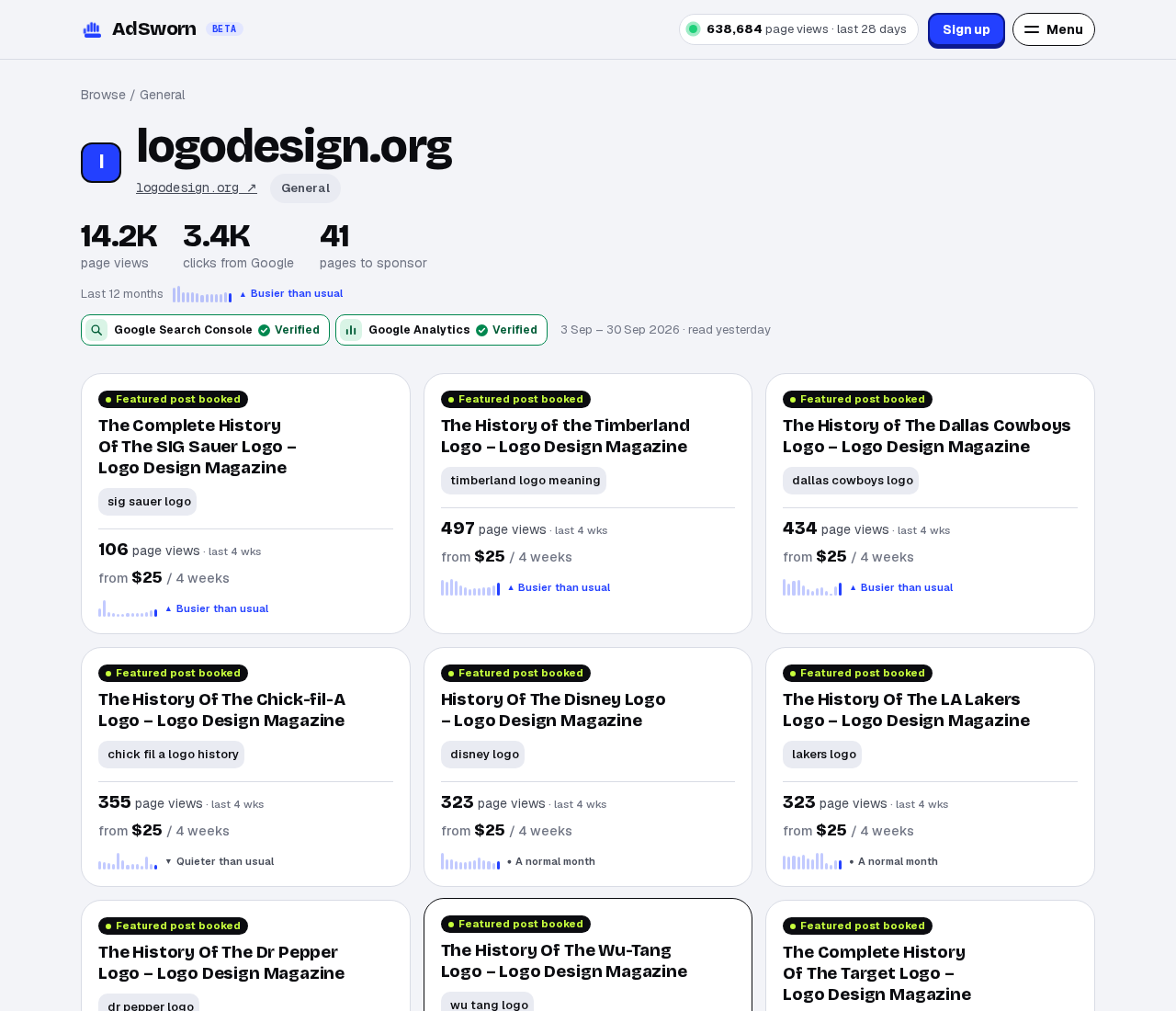
One disclosure before the review, because it matters here. LogoDesign.org is a listed AdSworn publisher: 41 of our pages are for sale on the platform, and we earn money when a sponsor buys one. We have never bought a sponsorship as an advertiser, so the sponsor side of this review is desk research. Every fact below comes from AdSworn's own public pages and from our public listing, both fetched October 4, 2026.
What Is AdSworn?
AdSworn is a two-sided marketplace that sells sponsorships on individual article pages rather than ad campaigns across a network. Site owners list pages and set their own prices. Sponsors browse by keyword, see each page's real Google searches, verified view counts, and a trend label, then request a banner ad or a featured post.
Nothing runs without the publisher's approval. A sponsor books a page and writes the ad, the site owner approves or declines it, and only then does money move. AdSworn holds the payment until its snippet confirms the ad is live on the page.
Two formats are on sale. A banner ad runs for four weeks: your headline, a line of copy, and your logo near the top of the page. A featured post runs for a year: your words inside the article, in the site's own style, marked Sponsored.
AdSworn Pricing and Fees
AdSworn does not set ad prices; publishers do. Sponsors pay the listed price and nothing beyond it. Site owners keep 92% of each sale, and AdSworn's 8% fee comes out of that payout, which the company says also covers card processing and ad delivery.
| Item | Number (fetched October 4, 2026) |
|---|---|
| Listing a site | Free, no contract |
| AdSworn's fee | 8% of each sale, taken from the site owner's payout |
| Sponsor fees | None beyond the listed price |
| Banner ad | From $25 per 4 weeks (owners set their own prices) |
| Featured post | $150 minimum per year; live listings run up to $2,000 |
| Refunds | Full refund if the owner declines or the ad never goes live |
Source: AdSworn's fees page and list-your-site page, adsworn.com, fetched October 4, 2026.
The starter rates explain where those numbers come from. AdSworn suggests banners at $15 per 1,000 page views per 4 weeks, with a $25 minimum, and featured posts at $20 per 1,000 page views over a year, with a $150 minimum. For comparison, AdSworn cites Google's figure of $10 to $20 per 1,000 views for sites that sell ads directly. A real listing shows what the top of the range looks like: a featured post on Flocksy's "12 Best Online Video Editors of 2026" article is priced at $2,000 per year.
The payment flow is the same in every case. A sponsor books for free and writes the ad. The publisher approves, the sponsor pays, and AdSworn holds the money. Once the snippet confirms the ad is live, the publisher is paid the listed price minus 8%. Ads that are declined or never go live are refunded in full, with no fee.
What AdSworn Does Well
- Traffic numbers are verified, not self-reported. Listings carry Search Console and Analytics badges with the date the numbers were read. Our own listing shows 14.2K page views and 3.4K clicks from Google over the last 12 months, read October 3, 2026, and any sponsor can see the same before spending a dollar.
- Pricing is fixed and public. There is no auction and no CPM math. A sponsor sees the exact cost of a page before requesting it, which makes small, targeted buys practical in a way auction-based ads are not.
- Publishers keep control. The site owner approves every sponsor, and nothing runs on the site unapproved. A publisher who dislikes a brand can decline the booking at no cost to either side.
- Escrow protects both sides. The sponsor knows payment is held until the ad is confirmed live, and the publisher knows the money exists before anything is published.
- Discovery matches buying intent. Sponsors search by keyword, such as "video editing" or "logo studio," and see the actual Google queries that bring readers to each page. That is a tighter fit than demographic targeting.
- Unsold inventory sells itself. An unsold banner shows a "Sponsor this page" ad with the page's real traffic, which replaces the media-kit PDF, rate-card spreadsheet, and invoice-chasing routine for small publishers.
Where AdSworn Falls Short
- The inventory is small and young. Roughly 639K views across the network in 28 days is a rounding error next to programmatic advertising. A sponsor who needs volume, frequency, or many geographies cannot get it here yet.
- Page traffic swings. Listings label pages "Quietest in a year" or "Best in a year." A $25 banner buys this month's audience, and there is no performance guarantee if next month is quieter.
- Featured posts live inside editorial. A sponsored block inside an article can read as editorial to a skimming reader, even when it is labeled Sponsored. The responsibility for clear placement, labeling, and rel="sponsored" links sits with the publisher, not the platform.
- Verification has a cost for owners. Publishers must connect Google Search Console, which is required, and Google Analytics as read-only data sources. That is how buyers get trustworthy numbers, but it is a real grant of access, and disconnecting it takes the listing down.
- Discovery is only as good as the catalog. With a handful of publishers, a keyword search can miss a category entirely. The marketplace works when a page matching the buyer's search already exists.
Who AdSworn Is For
For publishers, AdSworn fits sites with real search traffic that have never had the time to sell ads directly. If a page earns a few hundred views a month from searches a sponsor cares about, a $25 banner sale is found money that required no rate card, no sales calls, and no invoicing.
For sponsors, it fits small budgets testing a niche. A tool that wants logo-history readers, or a service that wants freelance-marketplace readers, can rent exactly that page for $25 and see its Google queries first. Brands that need scale, frequency, or guaranteed impressions should stay with search and programmatic ads and treat AdSworn as a targeted addition, not a replacement.
Final Verdict
AdSworn's idea is verification: buy the page, not the network's promise. For $25 a sponsor can put a message in front of a niche audience whose traffic Google counted, and a publisher gets paid without building a media kit. It is early, the inventory is thin, and featured posts need careful labeling to stay honest. As a beta, it delivers the thing it promises: receipts on the page before money moves.
AdSworn FAQ
What is AdSworn?
AdSworn is a beta marketplace for page-level sponsorships. Site owners list article pages with Google-verified traffic, and sponsors rent a banner ad or a featured post on a page they choose.
How much does AdSworn cost?
Sponsors pay the price listed on the page, starting at $25 for a four-week banner ad. Site owners list for free and keep 92% of each sale; AdSworn's 8% fee comes out of the owner's payout.
What formats does AdSworn sell?
Two. A banner ad runs for four weeks near the top of the page. A featured post runs for a year and is written in the site's own style, marked Sponsored, with the publisher's approval required in both cases.
Where does AdSworn's traffic data come from?
From Google Search Console, which is required, and Google Analytics, both connected read-only. Listings show verification badges and the date the numbers were last read.
What happens if a sponsor's ad never goes live?
The sponsor gets a full refund and pays no fee. AdSworn holds the payment until its snippet confirms the ad is live on the page.
Is AdSworn a replacement for Google Ads?
No. Google Ads rents clicks at auction prices above search results. AdSworn sells a fixed-price place on a specific article page for a set term, so the two serve different budgets and goals.
How do site owners get paid?
The owner approves a sponsor, the sponsor pays the listed price, AdSworn holds the money until the ad is confirmed live, and the owner is then paid the price minus the 8% fee.
Does LogoDesign.org use AdSworn?
Yes. We are a listed publisher with 41 pages for sale, and we earn money when someone sponsors one. We have not bought a sponsorship as an advertiser, which is why the sponsor side of this review is desk research.